
Exploring the human stakes of artificial intelligence through the lens of disability justice.
Habitable Worlds is a three-year, Mellon-funded initiative at Loyola Marymount University that confronts the ethical and social justice challenges posed by artificial intelligence—especially for disabled communities. At a time when AI is reshaping everything from education to healthcare, this project centers the critical insights of Disability Studies to ask: Who is technology built for? Who does it leave behind?
Rather than treating disability as a problem to solve, Habitable Worlds understands disability as a powerful framework for rethinking the values that drive innovation. From automated transcription tools to brain-computer interfaces, AI technologies often reflect narrow assumptions about intelligence, ability, and what it means to be human. Our project insists that these tools must be shaped by—and for—those most impacted by them.
Over three years, Habitable Worlds will fund nine faculty fellowships, launch nine new community-based courses, and host three public symposia on the intersections of AI, ethics, and disability. These efforts will build toward the creation of a new Center for Applied Humanities at LMU—an institutional hub where researchers, students, and community partners can collaborate on tech justice, accessibility, and the future of human-centered design.
With support from LMU’s Bioethics Institute, the Coelho Center for Disability Law, and partnerships across Los Angeles’s vibrant tech and advocacy sectors, Habitable Worlds places the humanities at the heart of digital innovation. Our mission is clear: to prepare the next generation of scholars and changemakers to ask not just what AI can do, but what it should do—and for whom.
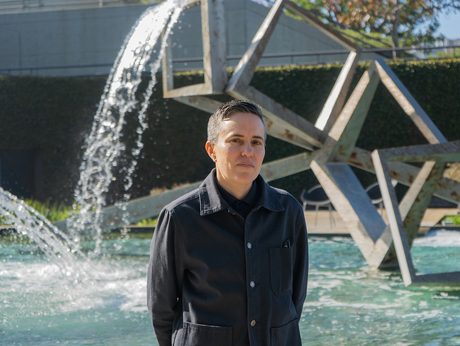
Mairead Sullivan is a feminist and queer studies scholar whose work bridges critical health studies, disability justice, and digital humanities. As a professor of Women’s and Gender Studies and Director of the University Core Curriculum at Loyola Marymount University, Sullivan leads cross-disciplinary collaborations that bring faculty, students, and community partners together to explore how power, identity, and innovation shape our shared worlds. Sullivan’s research examines the cultural politics of health and illness, with a focus on marginalized communities and the ethics of emerging technologies. Sullivan is the author of Lesbian Death: Desire and Danger between Feminist and Queer and is currently working on Herpes: A Cultural Biography, a project supported by the NEH and NSF.



PRINCIPAL INVESTIGATOR
Mairead Sullivan, Ph.D
Professor of Women's and Gender Studies | Director of the University Core Curriculum, Loyola Marymount University
University Hall, 1 LMU Drive, Suite 3500
Los Angeles, CA 90045-2659
MAILING ADDRESS
Women's and Gender Studies, Loyola Marymount University
University Hall, 1 LMU Drive, Suite 3500
Los Angeles, CA 90045-2659

All rights reserved. Habitable Worlds Project